Are these best sellers a new way forward?
On Braiding Sweetgrass and The Body Keeps the Score
There is this famous quote by Ralph Waldo Emerson, “Do not go where the path may lead, go instead where there is no path and leave a trail.” It is an ambitious quote, one that is easier said than done. As someone who values interdisciplinary learning, especially overlaps between science and art, this quote feels validating. I have taken a winding road in my work life where nature writing has become a central vein, both a professional and personal calling.
Nature + Healing
For how many weeks has Braiding Sweetgrass by Robin Wall Kimmerer and The Body Keeps the Score by Bessel Van Der Kolk been at the top of the hardcover and now paperback best sellers list? Every time I go to my local bookstore, I like to check the shelf. Yup, still there. And deservedly so!
I have read both books and know my personal reasons for loving them. However, I have to wonder—what are other people craving from these books?
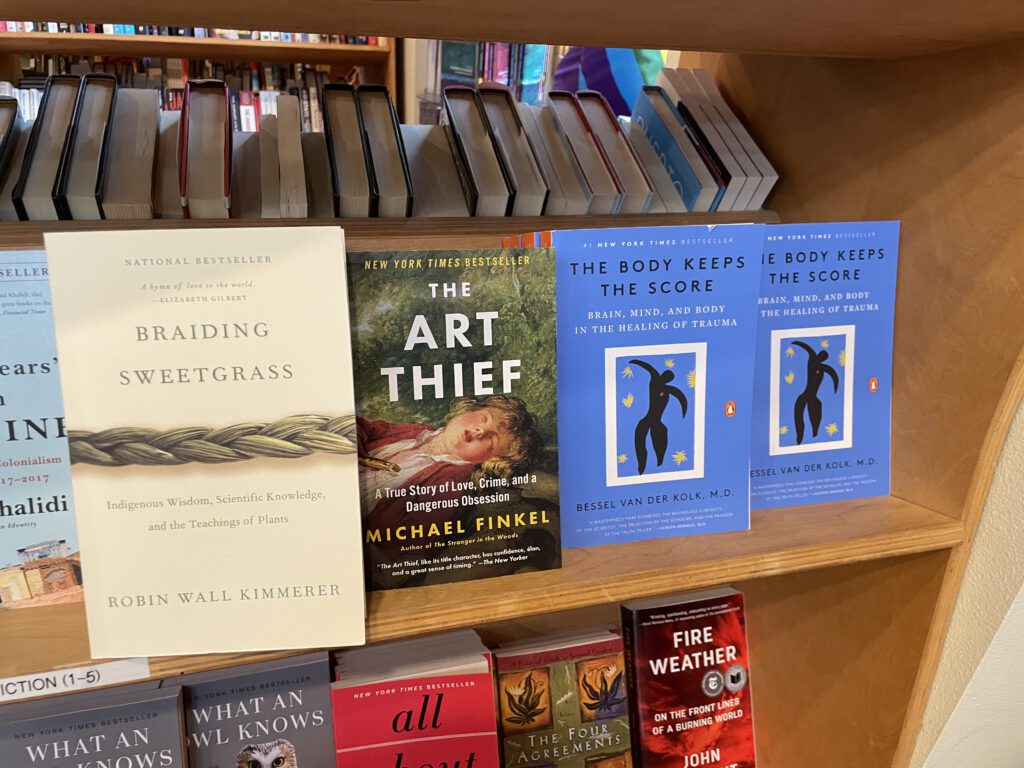
Beside being a beautiful writer, Kimmerer offers an important paradigm shift about our relationship to nature. I sense that her ideas of reciprocity are essential ethos of many indigenous cultures. However, in her spirit of generosity, she offers them to a new, mainly Western sphere of readers, in as series of original, lyrical essays.
Here is a favorite quote (of many) from this book:
“Even a wounded world is feeding us. Even a wounded world holds us, giving us moments of wonder and joy. I choose joy over despair. Not because I have my head in the sand, but because joy is what the earth gives me daily and I must return the gift.”
Bessel van der Kolk’s book is much more pragmatic, but just as impactful. We carry trauma in our body. If you don’t deal with that trauma, it will turn into physical and mental illness. He writes:
“Neuroscience research shows that the only way we can change the way we feel is by becoming aware of our inner experience and learning to befriend what is going inside ourselves.”
Seeing these two books side-by-side is meaningful to me and I want to call attention to them both and where they potentially overlap. I believe that being in nature helps us reconnect to our physical bodies and senses. Writing about nature—as Kimmerer does so eloquently—can offer another version of healing that may reach even deeper. Looking forward, and reflecting on the insatiable popularity of these books right now leads me back to the Emerson quote.
Is nature writing as medicine a new path forward to greater wellbeing?
Nature Writing + Healing
I presented on nature writing as solace a few years ago and it has become an essential part of my creative work and coaching. To be transformed by your connection to nature, either passing through a park or hiking deep in the wilderness, is no small thing. I write that “Embodied ecopoetics, combining writing and nature-based activities, can be a pathway for processing trauma, ranging from abuse to ecological grief, and cultivating post-traumatic growth.”
A mind-body connection is formed after noticing nature and then doing the hard work of writing that down and reflecting on our own selves. While this may seem human-centric, I believe there is a lot of hope and humility born from this process and I would like it to be a more common practice.
I imagine these two books will be on this shelf for a long time. We also need more stories that marry the transformative aspects of being in nature with the deep inner work needed to heal social and emotional wounds.
A Note on Nature + Harm + Climate Change
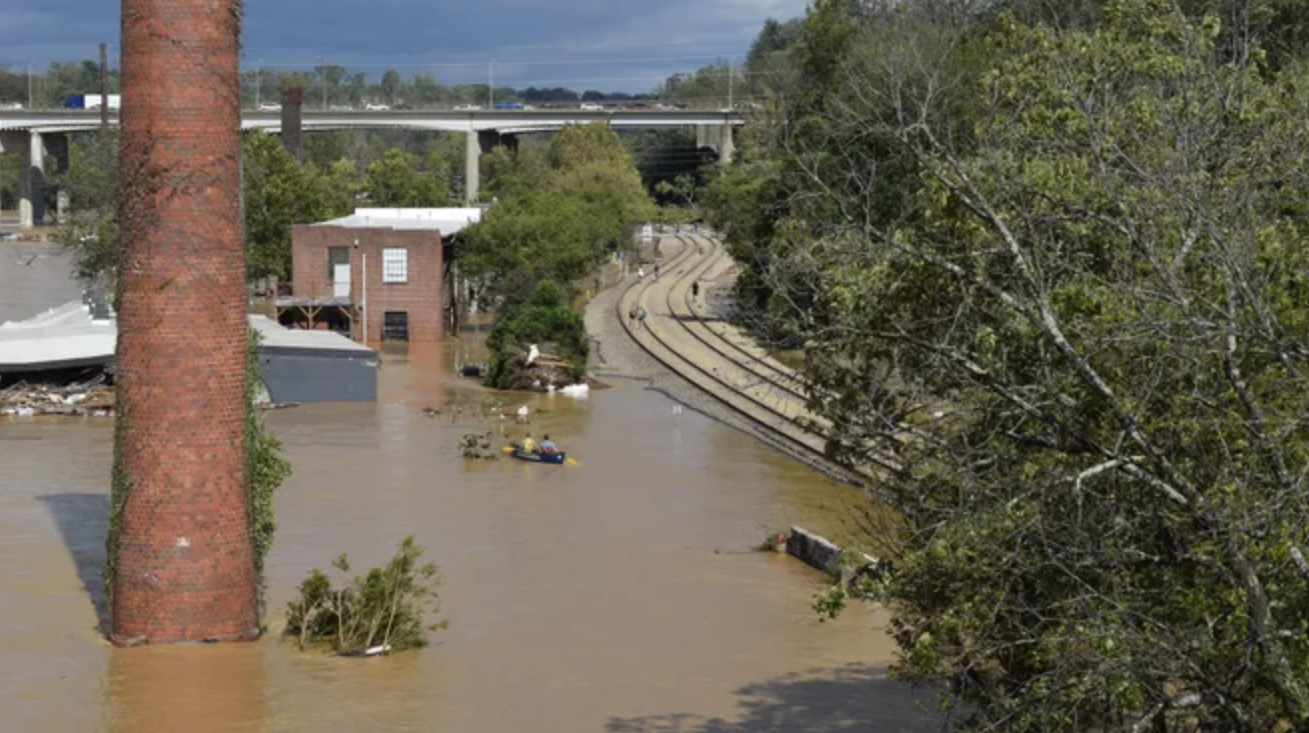
Writing about nature is not always easy. I have been following the aftermath of Hurricane Helene. The death toll, the loss of entire towns and building, is devastating. I have been to Asheville, NC a few times and it’s a place of great natural beauty and artistry. This extreme weather event has caused wide-scale destruction and pain—trauma that will last for a long time. I hope that these communities can cope and endure through the complicated rebuilding process.
The extremity of this storm—the volume of rain and intensity— is **most likely** a result of human-induced climate change. This was the equivalent of a 500-yr flood in western North Carolina that came out of nowhere. I hope these communities—still writhing in the water and mud and surprise of it all—can learn to trust their nature again and find healing and support.
Here is a list of ways to help from BLUE RIDGE PUBLIC RADIO.