
The Five Stages of Ecological Grief
Writing Poems for the Anthropocene

The term ecological grief has been used to understand the loss humans experience as a result of ongoing, irreversible environmental destruction. Other related terms include climate grief, solastalgia, and eco-anxiety. While ecological grief is akin to several forms of grief, such as disenfranchised grief, it is distinctively different. Unlike mourning the loss of a loved one or friend who has passed, environmental loss in the Anthropocene (a term used to the current geological epoch during which human activity has been the dominant influence on climate and the environment) is ongoing and encompasses what is gone as well as the various predictions for widespread destruction disproportionately affect specific places and populations in the future.
Elisabeth Kübler-Ross famously described the five stages of grief as denial, anger, bargaining, depression, and acceptance. While this stage theory has evolved, most notedly by David Kessler (a colleague of Kübler-Ross who introduced a possible sixth stage: meaning) this framework can serve as an interesting lens for processing and writing about ecological grief. Although poets aren’t always invited to the table to discuss environmental policy and regulation (the arts are notably underrepresented at UN Climate Change Conferences, as an example), there is an urgent need for imagination and public engagement in order to curb climate change impacts and develop conservation strategies worldwide.
By sharing our ecological grief, perhaps poets and creative writers might illuminate the science of what is happening and get to the heart of why each individual needs to care about what we are losing and what has already been lost. While grief, like writing, is not linear these stages can overlap and evolve within a poem. By employing the five stages of grief to our writing, ecopoets can explore both interior and exterior landscapes to craft new poems, probe this grief, and create a path towards awareness, climate justice, and, perhaps, a sixth stage specific to ecological grief: action.
Denial
Life makes no sense. We are in a state of shock and denial. We go numb. We wonder how we can go on, if we can go on, why we should go on.
There is a spectrum of belief and understanding around climate change. According to the Yale Program on Climate Change Communication, “Six in ten Americans (60%) understand that global warming is mostly human-caused. About one in four (27%) think it is due mostly to natural changes in the environment.” Denial of the science implicating human activity in these changes is prevalent in the US which complicates and sometimes invalidates the experience of ecological grief. Concurrently, writers may be avoiding this topic in general because the feelings and emotions are too difficult or the issue itself it too monolithic.
In “What the Clyde said, after COP26” the Scottish poet, Kathleen Jamie, takes on the voice of the river Clyde. It is sly personification that addresses denial of climate change, or at least the reluctance to do something substantial about it, and in the final two stanzas she offers up consequence.
and, sure, I’m a river,
but I can take a side.
From this day, I’d rather keep afloat,
like wee folded paper boats,
the hopes of the young folk
chanting at my bank,
fear in their spring-bright eyes
so hear this:
fail them, and I will rise.
Anger
Be willing to feel your anger, even though it may seem endless. The more you truly feel it, the more it will begin to dissipate and the more you will heal.
I would argue that there is a foundation of anger in most poems about ecological grief. However, poems about climate change, habitat loss, or extinction created out of pure anger are largely unsuccessful. However, there are opportunities to channel this this emotion—feel it deeply, but let it transform into something more complete.
Several of WS Merwin’s poems channel a deeply rooted anger well and have strong emotional
appeal. In “For a Coming Extinction” he writes:
Leaving behind it the future
Dead
And ours
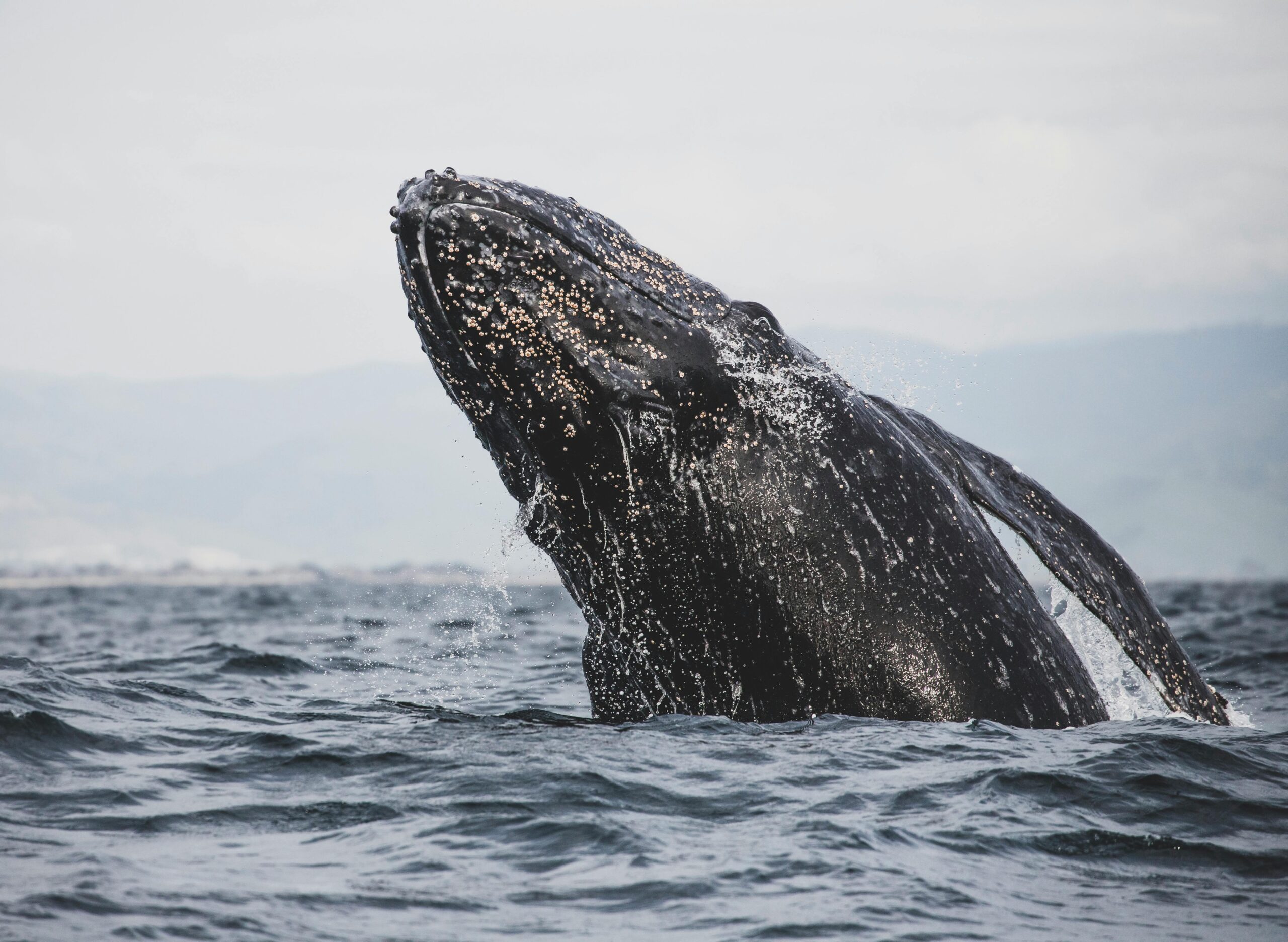
This poem is focused on grey whales and the speaker is in conversation with creation. Merwin does not mince words and anger and resentment are interwoven throughout this quiet, somber poem in a delicate way.
Bargaining
After a loss, bargaining may take the form of a temporary truce. “What if I devote the rest of my life to helping others. Then can I wake up and realize this has all been a bad dream?” We become lost in a maze of “If only…” or “What if…” statements.
From a creative standpoint, bargaining offers an interesting starting point for writing about ecological grief. Considering what could have been done differently, what desperate measures are needed to save our species, might offer an opportunity for discovery within a poem.
In “Conditional” by Ada Limon, the poet grapples with change and potential losses in an honest and revealing way. The reader gains insight into “what ifs” and their own inner bargaining voice.
Say we never get to see it: bright
future stuck like a bum star, never
coming close, never dazzling.
Depression
Empty feelings present themselves, and grief enters our lives on a deeper level, deeper than we ever imagined. This depressive stage feels as though it will last forever.
The murky mess of depression and ecological grief can prove to be fertile ground for poetry. Personally, it is from the depths of despair and helplessness over the latest wildfire or last week’s flood that inspires me at all to write at all about my own ecological grief. Crafting that depression into an artful piece of writing is not always easy, but it is a starting point.
The poem “O” by Claire Wahmanholm is an elegy and also a good example of how to grapple creatively with depression born of loss in nature. The repeating sound of ‘o’ throughout the poem works as a call or moan, emphasizing the poet’s melancholy. She concludes:
O Earth,
out-gunned and out-manned. O who holds the void inside itself. O who has made orphans of our hands.
Acceptance
Acceptance is often confused with the notion of being “all right” or “OK” with what has happened. This is not the case.
Many people are not willing to accept that climate change is inevitable, that we are on a path of no return. However, being aware that substantial alterations to the natural world have already occurred, largely as a result of human activities, is important. Not only does the acceptance stage offer the poet a chance to amplify current science and news events that many might have passed by unnoticed, it can also honor those things that can’t be fixed.
In “Characteristic of Life” Camille Dungy is in conversation with a line from a news story about the rate of invertebrate species extinction. She writes:
I will speak
the impossible hope of the firefly.
This beautiful, redemptive poem functions both as an ode and an education in what we are losing, what is already lost. The poet is an important witness to possibly irreversible change, offering a voice to the voiceless.

The Sixth Stage: Action
While I am in the glass-half-full circle—believing it’s not too late to make good on our relationship with the Earth—I do wake up most days plagued with guilt and remorse for how unsustainable the systems (like food, healthcare, and financial) that hold us have become. Although I have considered myself an environmentalist for over twenty years, and more recently an ecopoet, I have also made my own ecological compromises. I am not perfect and I am not expecting readers to be either. However, I am trying to pay attention and write through this deep-seated grief instead of bottling it up. By sharing our common remorse, perhaps we will be able to help craft a common future as well—one full of life and possibility, and hope for us wayward humans yet.
Thanks for reading. For more information on my writing & events visit: www.jessicagigot.com